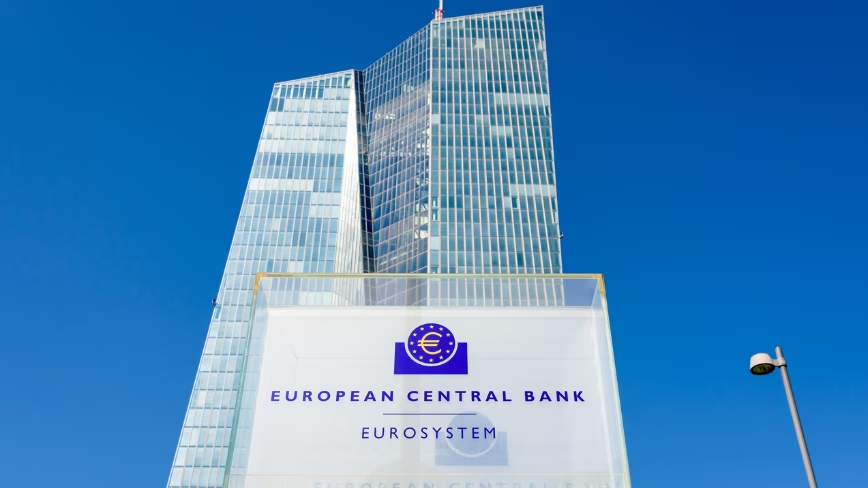
European Central Bank
 Credit: olrat via Shutterstock
The European Central Bank is preparing to put some of its own money into tokenized securities, moving from building the plumbing for digital asset markets to buying in them.
Settlement will occur in central bank money, routed through Pontes, the system the Eurosystem has built for trades running on distributed ledger technology.
What the bank intends to buy is conventional enough in substance: euro-denominated debt issued by central and regional governments in the euro area, by their agencies, and by European supranational bodies. Only the wrapper is new.
The announcement commits the bank to a “small portion” of the portfolio without attaching a figure, and leaves the operational details and timing to the Executive Board until that groundwork is done.
That decision is to take account of how tokenized issuance actually develops, which is a way of saying the size of the program depends on how much there turns out to be to buy.
The money is coming from the ECB’s own funds portfolio. That is not a monetary policy instrument: it is the pot whose returns help pay the bank’s running costs, with supervision funded separately.
So the institution is risking its own income rather than conducting an operation on the euro area economy, which is a smaller thing than it might sound and also the reason it can move at all.
Rather than watching tokenized markets from the regulator’s chair, the bank wants to work through an entire investment cycle itself, from executing a trade to settling it to running the systems and managing the position afterward. Institutions that only supervise a market tend to learn about it late.
Pontes is one of the two strands the ECB named; the other is Appia, which is meant to produce a blueprint for tokenized finance across Europe.
Together they are the bank’s answer to the question of how central bank money keeps working in markets that increasingly settle on ledgers, or, in the announcement’s phrase, how to keep it “fit for the digital age”.
This is separate from the retail digital euro, which is a consumer payment instrument rather than a wholesale settlement rail, and which the ECB is developing on its own timetable.
What the bank has not said is which securities, in what quantity, or on what date.
Get the TNW newsletter
Get the most important tech news in your inbox each week.


