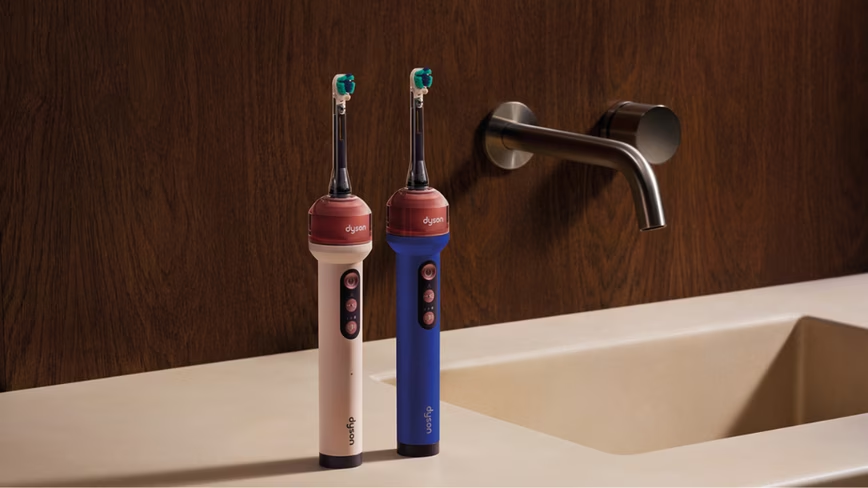
The Dyson CameraJet, the company’s first electric toothbrush, shown in two colourways.
 Credit: Dyson
Dyson has put a camera inside a toothbrush. The CameraJet went on sale Tuesday for $499, combining a 100,000-pixel macro camera in the brush head with a small jet that sprays mouthrinse between the teeth. The company says it has spent six years developing the product.
The camera is there mainly to help the toothbrush figure out where to aim, rather than simply to give users a close-up view of their teeth.
It captures 28 images a second and uses them to identify gaps between teeth within 100 milliseconds, directing the jet towards the areas it detects.
Behind that system are 16 million lines of code and 470,000 dental images used to train the software. Dyson calls the technology Gap Optical Targeting, and it is the main reason the company believes the CameraJet can command a $499 price tag.
“Flossing is an awkward and time-consuming chore,” said James Dyson, the company’s founder and chief engineer.
He said the team wanted to tackle three parts of the problem: being able to see between the teeth, removing plaque from those areas, and improving the cleaning people get from brushing.
The jet itself is conical rather than needle-shaped, which Dyson says performed better in its laboratory tests.
It draws liquid from a 12.5ml tank using a diaphragm pump and pressure chamber, while an anti-gravity system helps move the liquid through the device. The tank refills from the dock in about three seconds.
The brush head combines two types of bristles on a contoured surface. The firmer inner bristles are intended to tackle surface stains, while softer bristles around the outside clean along the gumline. An RFID tag in the brush head connects it to the app and tells users when it needs to be replaced.
Dyson says the CameraJet removes 69% more plaque from hard-to-reach areas than premium competitors.
That result comes from the company’s own testing, which used a proxy for plaque developed during a five-year collaboration with the dentistry faculty at the National University of Singapore.
The camera’s 100,000 pixels might sound surprisingly low, but the device does not need to produce detailed photographs of the mouth.
It needs to recognise the difference between a tooth and the space beside it, so the jet can be directed to the right place. A higher-resolution camera would add complexity without necessarily improving that particular job.
There is also the obvious privacy question that comes with putting a camera in a bathroom. Dyson says the camera is only active when the user is looking at the live view or when the automatic jetting function is running, and that no images are stored.
Those are Dyson’s stated privacy practices rather than claims that have been independently audited. That distinction matters more here than it would with an ordinary connected toothbrush because the device is deliberately looking inside the user’s mouth.
The CameraJet is connected to the rest of Dyson’s ecosystem as well. It uses Wi-Fi and Bluetooth and works with the MyDyson app, which provides guided cleaning, maps where the user has brushed, and offers personalised feedback.
For something most people still think of as a toothbrush, there is quite a lot of technology sitting behind the handle.
At $499, it costs about $100 more than the Philips Sonicare Prestige 9900 and Oral-B iO Series 10, two of the obvious products it is competing with.
Dyson is placing the CameraJet above the existing premium tier rather than trying to compete on price.
The 69% plaque-removal claim deserves some caution for the same reason. It comes from Dyson’s own testing and uses a proxy plaque developed specifically for that research, rather than an independent clinical trial showing that people using the CameraJet actually experience better dental outcomes.
The approach is familiar from Dyson’s other consumer products. The company tends to enter markets where people already have an established way of doing something, then build a more expensive product around the argument that the familiar solution has left room for better engineering.
That strategy has worked in vacuum cleaners, hand dryers and hair care, while its attempt to bring the same approach to electric cars ended with the company abandoning the project after significant development spending.
Oral care looks much closer to the categories where Dyson has managed to establish itself.
The business model is also designed to extend beyond the initial $499 purchase. Dyson plans to sell a non-foaming toothpaste without SLS and a low-foaming mouthrinse made specifically for the jet, while the RFID-equipped brush heads create a recurring market for replacements.
The CameraJet is initially available through Dyson Demo Stores and the company’s own website in two colourways.
Get the TNW newsletter
Get the most important tech news in your inbox each week.


