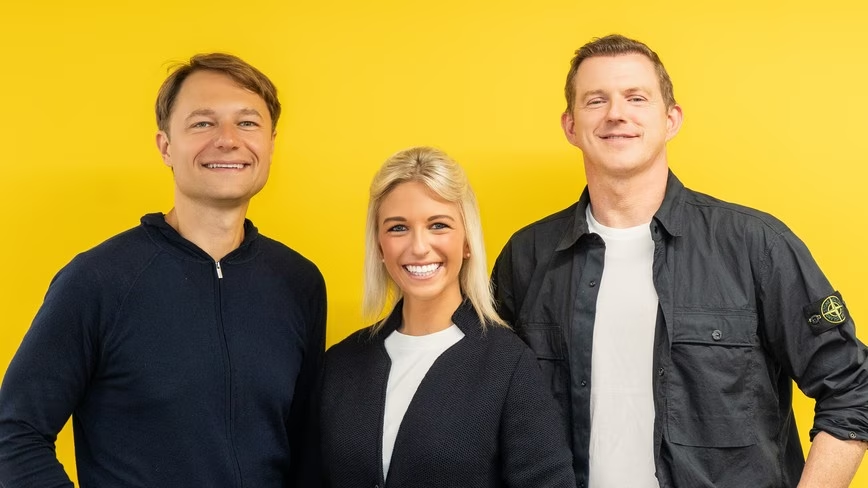
DIG Ventures partners Rytis Vitkauskas, Melissa Klinger and Ross Mason (left to right).
 Credit: DIG Ventures
DIG Ventures, the London-based firm led by MuleSoft founder Ross Mason, has closed its third fund at $120M. Fund III will back around 30 European pre-seed and seed-stage startups that build software infrastructure for AI.
Its institutional backers include Horsley Bridge, Sofina, Granite and an unnamed US university endowment. The founders of Slack, Datadog, Nord Security, Cast AI, Supercell and Dash0 have also put money in.
The fund targets what DIG calls control points, meaning the data, identity, compliance and orchestration layers that other software depends on. DIG plans to lead most of its rounds and has already started investing.
The thinking behind it is a shift in the economics of software. Because AI makes code cheaper and faster to write, DIG expects products to become harder to defend, with lasting value moving to the infrastructure underneath them.
“These are the companies whose advantages compound as the cost of building software falls,” said Ross Mason, founding partner at DIG Ventures.
Mason founded MuleSoft, which Salesforce bought for $6.5bn. He runs DIG with Melissa Klinger, formerly MuleSoft’s UK sales lead, and Rytis Vitkauskas, who founded YPlan and was a partner at Lightspeed Venture Partners.
The previous fund, DIG’s first from institutional investors, backed observability startup Dash0. Dash0 reached a $1bn valuation with a $110m Series B in March.
The same fund also backed Taktile, which builds AI tools for banks and insurers. In June, Taktile raised a $110m Series C led by Goldman Sachs Alternatives.
According to DIG, Fund II ranks in the top 10% of funds worldwide of its age and size, based on Carta data. The firm also says 80% of Fund II companies raised more institutional money within two years of its investment.
In addition, more than 90% of the Fund II companies that had launched a product entered the US market within 12 months, DIG says. That is the gap the firm says it wants to close for European founders.
“The continent is not short of technical talent. But the challenge is turning technical advantage into global distribution,” Mason said.
Get the TNW newsletter
Get the most important tech news in your inbox each week.


