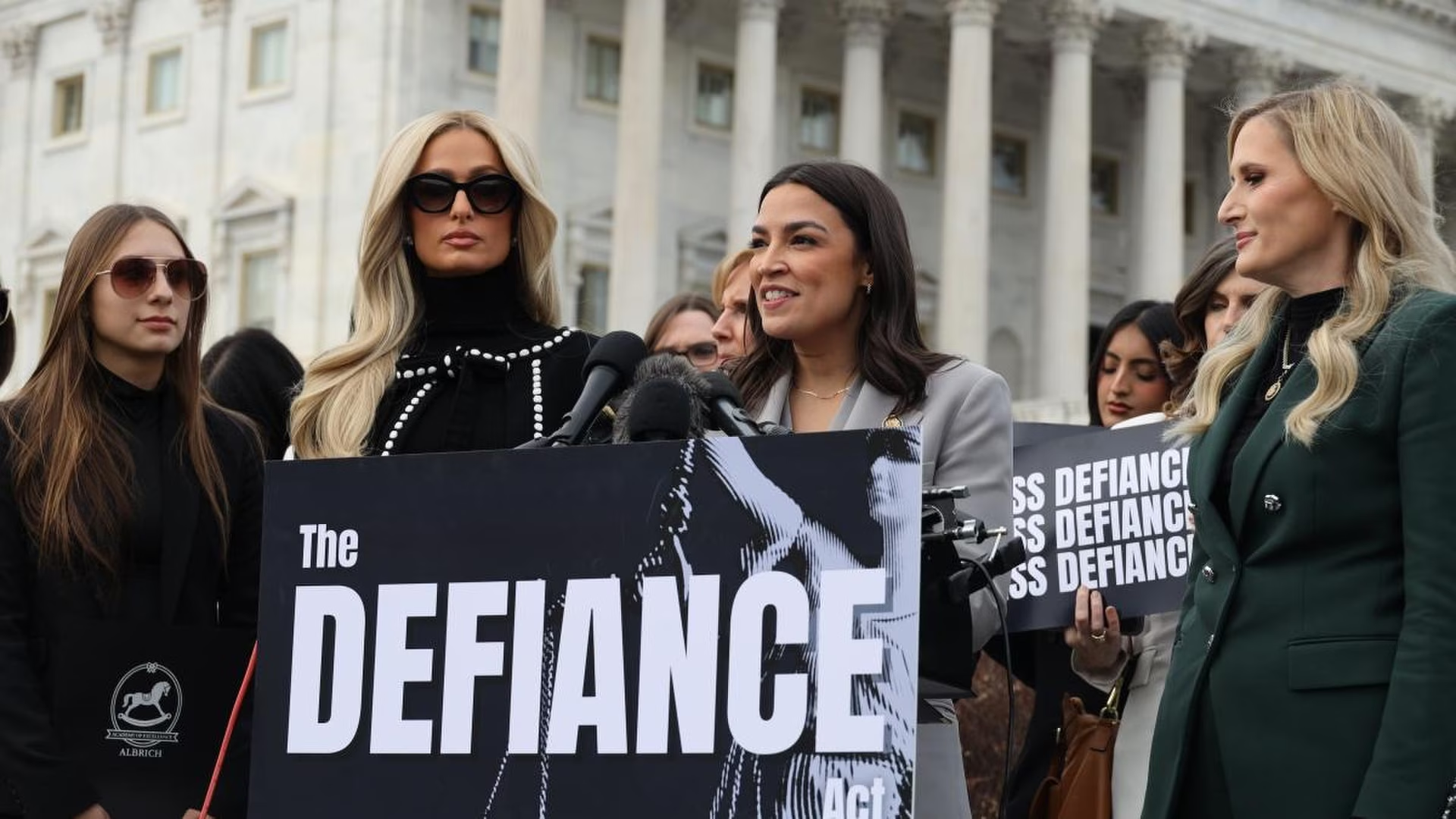
Paris Hilton, Representative Alexandria Ocasio-Cortez and Representative Laurel Lee at a Defiance Act press conference outside the US Capitol in January 2026

Paris Hilton and Representative Alexandria Ocasio-Cortez asked the House on Tuesday to vote on the Defiance Act. The bill would let victims of sexually explicit deepfakes sue the people who make and share them. The Senate passed it by unanimous consent in January. The House has never voted on it.
Hilton spoke on the steps of the Capitol alongside Ocasio-Cortez, Representative Laurel Lee and victims of deepfake abuse. She said strangers have made more than 100,000 AI-generated explicit images and videos of her.
“I can’t control who sees them. I can’t control where they go. And I can’t make it stop. And the laws aren’t protecting us,” Hilton said.
Her team also looked at how women in Congress appear in this content, she said. Of the 156 women in the current Congress, 83 have sexual deepfakes of them online, according to her team.
What the bill would do
The Defiance Act would add a civil right to sue to existing federal law, CNBC reported. Victims could sue anyone who creates, shares, publishes or threatens to share such images without consent. They could also recover legal costs and ask a court to order the content removed.
The Take It Down Act, signed in May 2025, already makes sharing such images a federal crime. Platforms must remove them within 48 hours of a valid request. Critics say it leans on federal prosecutors and gives victims no civil route of their own.
The House version has 70 cosponsors, 35 from each party, CNBC reported. Microsoft, Snap and OpenAI are among its backers. House Speaker Mike Johnson called it “good policy” in September but said the House had not yet built consensus. If the House does not act before this Congress ends, the bill must be reintroduced in January.
Lawmakers elsewhere are also moving against nudify tools. The UK plans a law requiring Apple and Google to block nude images for children. In the US, the Justice Department has backed xAI against Minnesota’s nudify ban. Giorgia Meloni has filed to trademark her voice against AI copies.
“This is not a Republican or Democratic issue. This is a human issue,” Hilton said.
Get the TNW newsletter
Get the most important tech news in your inbox each week.


