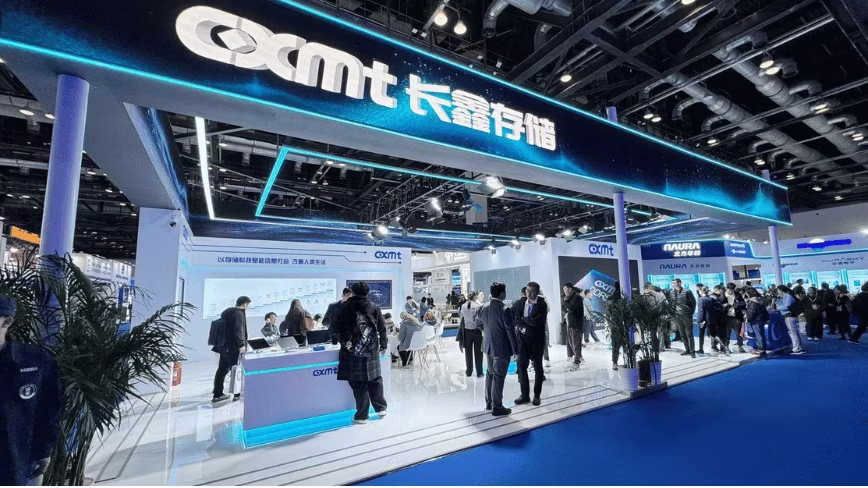
 Credit: CXMT
Chinese memory chipmaker CXMT expects a net profit of 131B to 132.5B yuan ($19.6B to $19.8B) for January to September, compared with a 5.3B yuan loss a year earlier. Revenue jumped to 265B to 270B yuan as AI demand caused memory shortages. Its chairman also proposed a share buyback of up to 2B yuan.
Chinese memory chipmaker CXMT expects to report a net profit of 131B to 132.5B yuan ($19.6B to $19.8B) for the first nine months of 2026, Bloomberg reported on Friday. A year earlier, it lost 5.3B yuan in the same period.
Revenue is set to reach 265B to 270B yuan, up from 32.1B yuan last year, according to the company’s preliminary filing with the Shanghai Stock Exchange. That is a rise of more than eightfold.
CXMT said demand for AI computing has lifted the global market for DRAM, the memory used in phones, PCs, and servers, since the second half of 2025. As a result, chips are in short supply and prices have risen sharply, according to The Paper.
The company also said it has added capacity and made better use of its factories, getting more chips out of each silicon wafer.
Separately, chairman Zhu Yiming proposed that CXMT buy back 1B to 2B yuan of its own shares over 12 months. The shares could be used for staff incentive plans or cancelled, The Paper reported.
CXMT listed in Shanghai in July, when its shares rose 466% on the first day. Its market value stood at about 3.06T yuan when trading closed on Friday.
In September, the company said its fifth-generation DRAM had entered mass production, a claim that outside testers have not verified. Some Western brands, such as Corsair, have also started using Chinese DRAM in their memory kits.
Get the TNW newsletter
Get the most important tech news in your inbox each week.


