 Credit: Current
The Current Series E is in. The New York neobank raised $80m, led by Springcoast Partners, at a $1.5bn valuation.
That headline hides the real story. In 2021, Andreessen Horowitz valued Current at $2.2bn. The new round sits about a third below that peak.
So this is a down round. It is also, the company says, a sign of strength. Revenue grew more than 70 per cent last year, the third year running. Current says it is now crossing into profitability in 2026.
Growth up, valuation down
That gap is the post-2021 fintech story in miniature. Money was cheap in 2021. Valuations raced ahead of revenue.
Then rates rose, and the market reset. Current grew into its old price rather than out of it. The revenue kept climbing, but the $2.2bn tag took years to chase.
The numbers tell the arc. A Tiger Global-led Series C valued Current at $750m in 2020. The Series D tripled that in five months. This round is the slower, more sober kind of fintech finance.
What the Current Series E buys
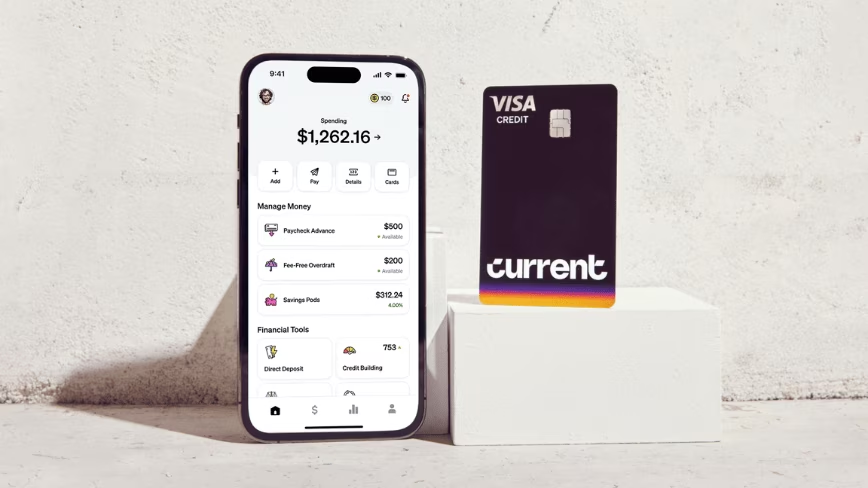
Current sells banking to Americans who live paycheck to paycheck. The app bundles spending, saving, investing, and early access to wages. A secured “Build” card helps users lift their credit scores.
Strictly, Current is not a bank. It is a fintech that places customer deposits with partners such as Cross River Bank and Choice Financial Group.
Stuart Sopp, a former Morgan Stanley trader, co-founded Current in 2015. It grew fast in the pandemic, when stimulus payments landed early in its accounts. In December 2024, it raised fresh equity and debt on the back of record growth, Axios reported.
The new money funds more of the same, with an AI layer on top. Current will expand its banking, payments, liquidity, and credit products. It also deepened two financing ties, with Cross River and General Catalyst’s Customer Value Fund, to lend at greater scale.
Sopp and chief technology officer Trevor Marshall have a phrase for their AI discipline: “return on tokens.” They told the Fintech Business Weekly podcast they measure what each dollar of AI spend returns, rather than buying compute on faith.
The road to the public markets
The raise reads as pre-IPO housekeeping. Springcoast takes a board seat. The backer list, which includes a16z, Tiger Global, Wellington, Sapphire, and QED, is the kind that wants an exit.
Sopp is explicit about the destination. The round, he said, “reflects confidence in the strength of our business, our progress toward public market readiness, and the value we’re creating for millions of members.”
Current joins a crowded queue. Klarna is bolting savings accounts onto its US app as it angles to become a bank. Monzo quit the US to chase a London listing. The US IPO pipeline is filling fast.
The pressure runs across the sector. Starling’s latest UK results show investors now want durable profit from neobanks, not just growth.
The bull case is clean. A neobank growing 70 per cent a year, turning profitable, with real lending revenue, could list well. The bear case is the down round itself. Public investors, unlike the private ones of 2021, will price Current on what it earns, not on what it might.
Get the TNW newsletter
Get the most important tech news in your inbox each week.


