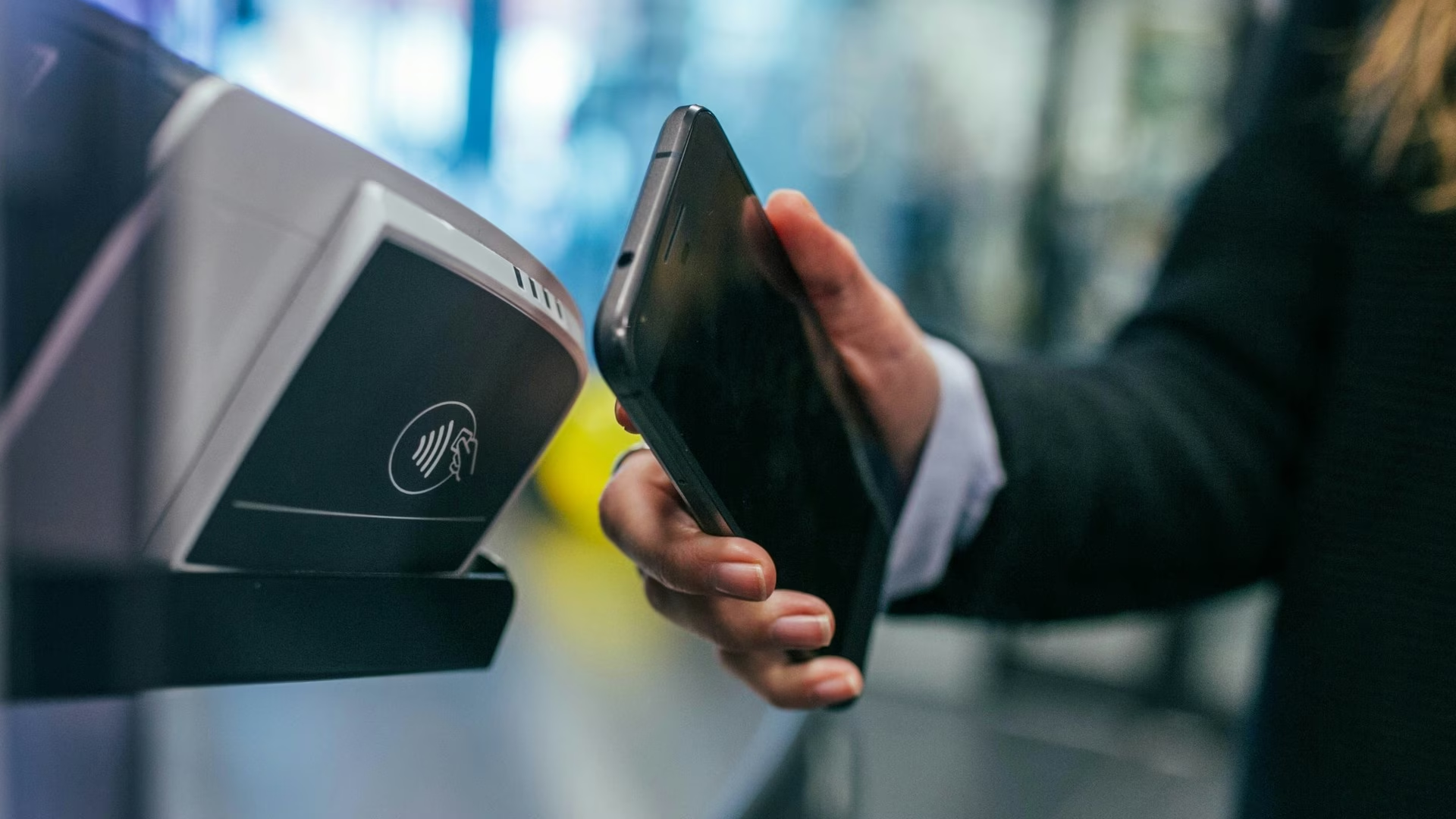
A smartphone held to a contactless payment reader.

A supplier waiting to ship an order needs to know when the money will be in its account. A bank can send a payment instruction across a border in seconds and still have no good answer if someone at the other end has to call back about a missing detail. I think banks could spare more customers who wait if payment operators published their rules in a form banks could check automatically, while the sender is still at the screen.
In the first quarter of 2026, Swift found that 75% of payments on its network reached the recipient’s bank within 10 minutes. The bank gets the notification within 10 minutes; this does not mean funds are available in 10 minutes. The clock that matters to the supplier runs until the bank credits its account. Several factors affect that timing. One is that the banks and payment operators can influence whether the sending bank knows which details the receiving system will require.
The industry has agreed on a common way to write financial messages, known as ISO 20022. It gives banks a place to record details such as the reason for a payment. Individual payment systems still have some say over when a sender must supply that reason and which codes they accept. In 2026, the Committee on Payments and Market Infrastructures updated its guidance on cross-border payments, warning that differences in how institutions apply the standards could limit its benefits.
Consider a home purchase. For certain property payments through CHAPS, the UK’s high-value payment system, the Bank of England specifies a purpose code. One code, PCOM, identifies a payment to complete a property purchase. Knowing where to put four letters in a message is the easy part. A bank also needs to know which transactions the rule covers and when to ask a customer for the information. Each bank that translates the guidance into software has another opportunity to interpret it differently.
Now imagine a German business paying a supplier in Manila. If a detail the German bank treats as optional is required further along the route, the first person to notice may be several time zones away. That person may have to contact the sending bank, which may in turn need to reach its customer. Meanwhile, the supplier has to decide whether to release the order. Asked at the outset, the same question might have taken the buyer a moment to answer.
What I would change is how payment operators publish their metadata, the information that tells a bank how to interpret and check each field. Today a bank may need to consult a rulebook, a separate list of codes, and a notice announcing when a revision takes effect. Operators should also publish those requirements in a form software can read. A shared directory would give banks one place to find the authoritative rules for each part of a payment’s route.
There is a model worth testing. Statistical Data and Metadata Exchange, or SDMX, grew out of an initiative launched in 2001 by institutions including the International Monetary Fund and the Bank for International Settlements. It gives organizations a common way to share definitions and code lists. Applied to payments, it could let each operator retain control of its rules while a sending bank retrieves them as it prepares an instruction. Keeping earlier versions would also let staff investigating a delayed payment check which rule applied on the day it was sent.
I would start with two payment operators, banks at both ends of one trade route, and a handful of fields that regularly trigger follow-up calls. A central bank and a standards body could help the operators agree on definitions. The banks could then test dated versions of those rules against past payments to see which queries an earlier check might have prevented and how often it would have flagged a valid instruction. Before expanding, they should run a live trial and publish the change in follow-up calls and the time it takes recipients to get paid. For the supplier in Manila, success means being able to release the order sooner.
Get the TNW newsletter
Get the most important tech news in your inbox each week.


