Social media
 Credit: Canva
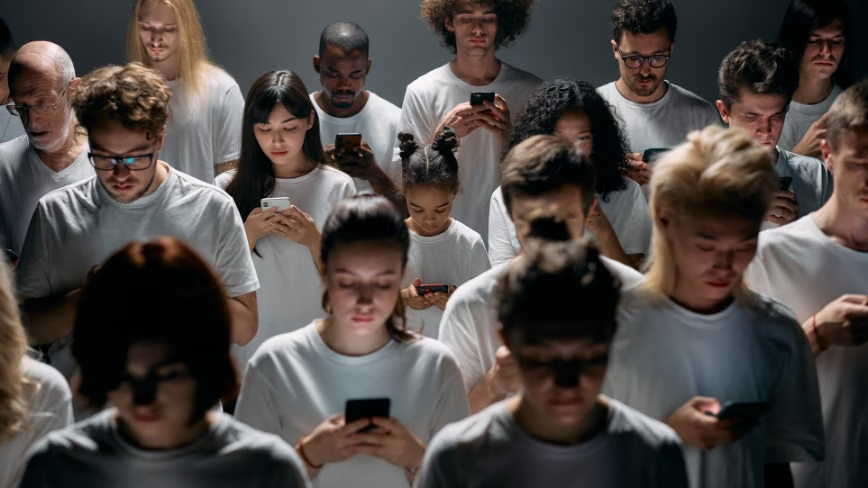
Getting on social media too young may cost children in the classroom. A large new study has found that pupils who joined the platforms early went on to earn worse grades than those who waited.
The research is unusually robust. Published in Nature Human Behaviour, it tracked more than 5,000 pupils in northern Italy from ages seven to sixteen, checking their performance at four points along the way.
The pattern was consistent. Children who joined social media at 11 or 12 scored worse by eighth grade than later adopters, and the gap widened by the age of 15 or 16.
Maths took the heaviest hit. The decline was sharpest in mathematics for pupils exposed to the platforms before the age of 13, the subject where sustained concentration matters most.
One subject bucked the trend. English scores showed no similar drop, which the researchers suggest may be because the sheer volume of English-language content online offers a kind of informal lesson.
The proposed culprit is distraction. The authors point to smartphone interruptions at key moments of the day, the constant pull of notifications fragmenting the attention that learning depends on.
The researchers are careful about their claims. The study shows a correlation between early adoption and academic decline, but it does not prove that social media directly causes worse grades.
That caveat matters. Children who join early may differ in other ways, from home environment to existing study habits, and untangling those threads from the apps themselves is notoriously difficult.
What gives this study weight is its design. Rather than a one-off snapshot, it followed the same pupils over years and across multiple assessments, which is far more revealing than surveys taken at a single moment.
The English exception is intriguing in its own right. If exposure to English-language content really did cushion those scores, it hints that the harm lies less in screens themselves than in how, and on what, children spend their time.
Even so, the direction of the evidence is clear enough to inform policy. The authors call for digital-literacy programmes, tighter regulation of how platforms engage minors, and rules restricting children’s access.
Those recommendations land in a receptive moment. Governments across Europe are already moving, with Greece set to bar under-15s from social media from 2027.
Britain is weighing its own limits. The UK has been debating an under-16 social media ban, part of a wider effort to rein in the platforms’ grip on young users.
France is on a similar path. It has moved closer to banning under-15s, adding to a European consensus that childhood and infinite scrolling do not mix well.
The stakes are rising in the courts too. In the United States, social media companies have paid out large settlements, including one that exceeded a school district’s annual budget, to avoid trials over their effect on children.
The platforms tend to contest such findings. Companies argue that their apps offer educational and social benefits and that blunt bans overlook the good alongside the harm, a defence regulators increasingly meet with skepticism.
For schools, the practical takeaway is narrower than a ban. Many are already moving to limit phones during the day, a response aimed squarely at the classroom distraction this study identifies as the likely culprit.
For parents and policymakers, the new study adds hard data to a gut feeling. It cannot settle the causation debate, but it puts a number on a worry many already had, that the years spent scrolling are years not spent learning.
Get the TNW newsletter
Get the most important tech news in your inbox each week.


