TL;DR
California’s $351.7B budget taxes downloaded software for the first time, raising $2B annually. A ballot measure would let the state save more from AI IPO windfalls.
The tax is expected to raise $900 million for the state and $1.1 billion for local governments annually. A ballot measure would let the state save more from AI IPOs.
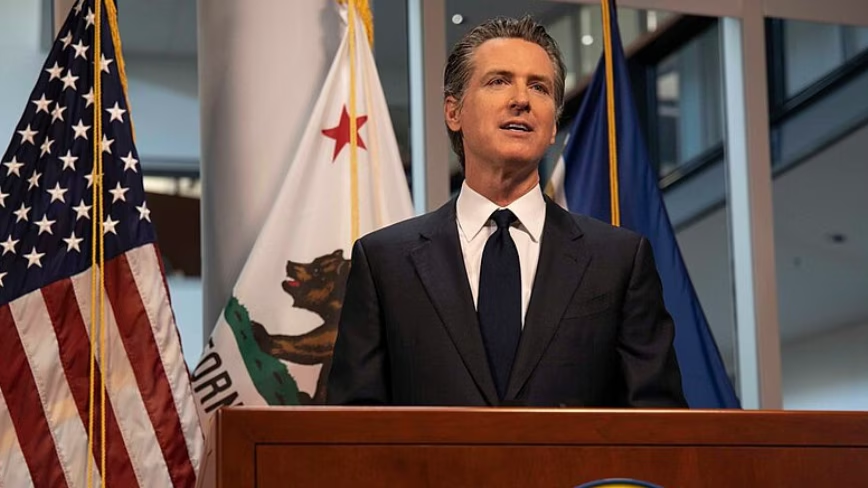
Gavin
 Credit: Office of the Governor of California
California’s $351.7B budget taxes downloaded software for the first time, raising $2B annually. A ballot measure would let the state save more from AI IPO windfalls.
California Governor Gavin Newsom and top Democratic legislators agreed on a $351.7 billion state budget that will extend sales tax to prewritten software downloaded from the web. The tax is expected to raise $900 million for the state and another $1.1 billion for local governments starting in fiscal year 2028 and annually thereafter, according to Bloomberg.
The change applies to software that was previously only taxed when purchased on a physical disc. “Most of us don’t get prewritten software on a physical disc anymore. The whole world is past that, our tax code isn’t,” said state Senator John Laird during a legislative debate on June 18.
Republicans argued the measure raises costs for businesses that rely on software ranging from basic office productivity apps to electronic medical records. “For millions of Californians, this isn’t abstract. This impacts real people, real businesses. This tax could be the difference between making payroll and missing it,” said state Senator Suzette Martinez Valladares.
The budget also places a measure on the November ballot that would allow California to save more money from revenue spikes, such as the IPOs planned by California-based OpenAI and Anthropic. The state’s highly progressive tax structure leaves its finances vulnerable to market downturns, and the budget leaves $35.2 billion across savings accounts with $4.5 billion in the regular reserve.
The spending plan is Newsom’s last as governor and arrives as state finances are buoyed by the AI boom. But even with better-than-expected tax revenues, the budget is largely void of major new spending commitments. Appropriators are saving in anticipation of significant federal funding cuts to healthcare under Trump. The deal provides $90 million for distressed hospitals and $250 million for public hospitals, less than half what hospital systems requested to prepare for over $3 billion in annual federal cuts.
The budget also extends existing limits on business tax credits and establishes a permanent cap in 2030, when companies will be limited to using the greater of $5 million in credits per year or 70% of their tax liability. A separate proposal for a one-time tax on billionaires, backed by a labour union, is advancing to the ballot despite Newsom’s attempts to negotiate a compromise. The AI boom has reshaped California’s fiscal landscape, but the state is building reserves rather than spending the windfall, hedging against the possibility that the same market that is filling its coffers could correct sharply.
Get the most important tech news in your inbox each week.


