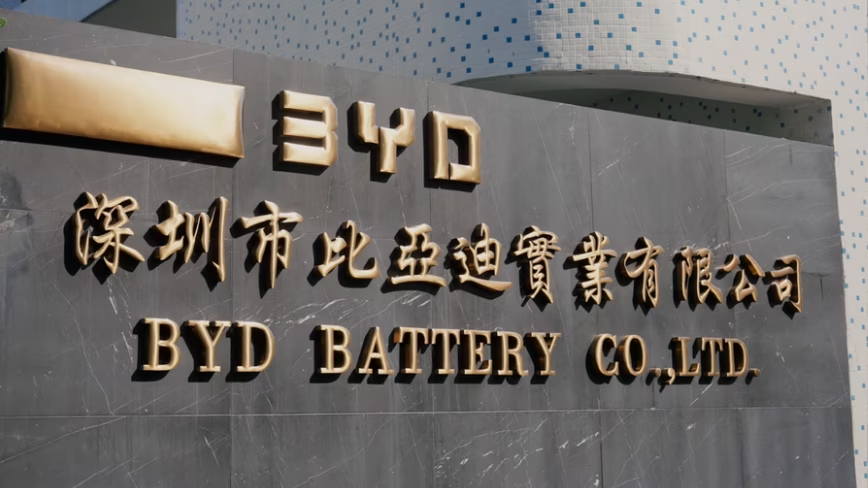
BYD Battery Co., Ltd. early signage showcased at the BYD Museum in Pingshan, Shenzhen, China
 Credit: iMoD Official
BYD opened its 10,000th Flash Charging station on 28 August, doubling the network in under five months, with each connector rated at up to 1,500kW. European rules require a charging pool on the core road network to deliver 400kW in total this year, rising to 600kW by 2027.
BYD opened its 10,000th Flash Charging station in Shenzhen on 28 August, CnEVPost reported. The network has doubled in under five months.
Each connector delivers up to 1,500kW. A second-generation Blade battery goes from 10% to 97% in nine minutes on one, which is BYD’s own figure for its own newest cars.
The target for the year is 20,000. That means about 80 new stations a day against the 34 a day it has managed since April, InsideEVs calculated.
Six months of operation produced usable numbers. The network delivered 210 million kWh to 1.83 million drivers, and nearly a third of them were not driving a BYD.
Most of it is not BYD’s own capital. Around 18,000 of the 20,000 are being built with partners including Sinopec, PetroChina, CNOOC, Teld and JD.com.
China’s oil majors are installing megawatt EV chargers on their forecourts. Coverage now reaches more than 300 cities, and the first 300 stations outside China are planned for the United Kingdom by the end of the year.
Europe’s rulebook is written in hundreds of kilowatts. AFIR requires a charging pool every 60km on the core road network delivering 400kW in total by the end of this year, rising to 600kW and two 150kW points by 2027.
Set that beside a single Chinese cable. One BYD connector carries two and a half times what an entire European site must provide in 2027.
The hard part is not the cabinet. Each station pairs with on-site battery storage, which buffers a draw that no ordinary distribution connection would carry.
European charging has been busy with a different problem. Much of the effort has gone into kerbside chargers for people who park on the street.
Both things are true at once. A continent can need slow chargers on residential roads and still find itself outbuilt on the trunk network, and neither problem solves the other.
The competitive context is familiar. Chinese brands have taken a record share of the European car market, and the chargers are now following the cars.
Which is the part to watch. If 300 British sites open on schedule, the argument stops being about specification on a datasheet and starts being about who built the thing you plug into.
Get the TNW newsletter
Get the most important tech news in your inbox each week.


