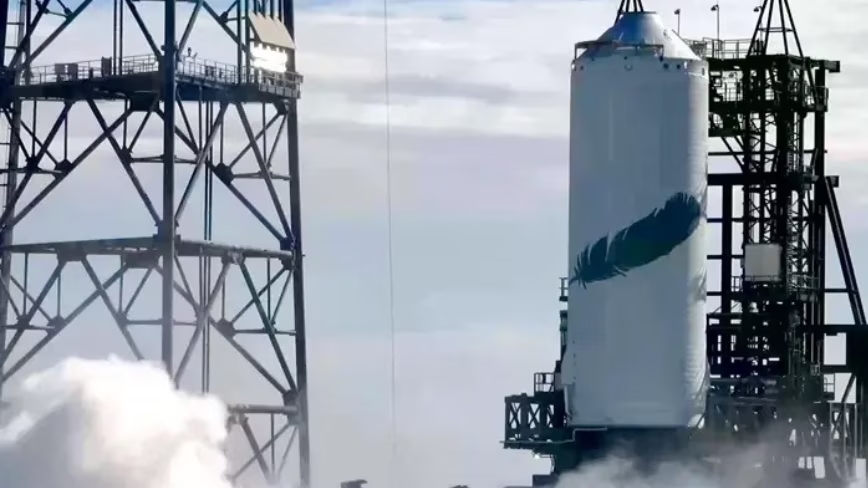
Blue Origin has disclosed that last week’s New Glenn rocket explosion at Cape Canaveral spared the launch pad’s fuel tanks and several other critical components, offering the company a faster path back to flight than the initial images of the blast suggested. CEO Dave Limp said the methane, hydrogen, and oxygen tanks “look to be in good shape,” the water tank is undamaged, and the support tower still standing can be repaired in place. A booster and other rocket hardware stored nearby also survived.
“We will fly again before the end of this year,” Limp said in a post on X, calling the assessment “a bit of good news.” The explosion, which occurred during an engine-firing test of New Glenn’s seven BE-4 first-stage engines, destroyed the lightning tower and the transporter-erector used to move and hoist the rocket, and sent shock waves across the state. The cause remains under investigation.
NASA’s Artemis problem
The timeline matters because NASA is depending on New Glenn. Just two days before the accident, the space agency awarded Blue Origin a contract worth hundreds of millions of dollars to use New Glenn rockets to launch a pair of lunar rovers ahead of the first Artemis moonwalkers. New Glenn is also required to launch Blue Origin’s Blue Moon lander, the vehicle that will deliver astronauts to the lunar surface for the first crewed moon landing since Apollo 17 in 1972.
NASA is targeting 2028 for that landing. Administrator Jared Isaacman said the agency will “do all we can” to help get the pad back in action as quickly as possible “while staying extremely focused on progressing the lander.” NASA has also ordered SpaceX Starships for Artemis lunar surface missions, giving the programme two commercial pathways to the moon, but losing one of them to a launch pad reconstruction delay would compress an already tight schedule.
Three flights and a long road
New Glenn has launched only three times, making it one of the least-flown orbital-class rockets in active service. SpaceX’s Starship, which is significantly larger, is conducting test flights from Texas and has a more advanced flight heritage. The comparison is uncomfortable for Blue Origin: SpaceX has built its reputation on rapid iteration and frequent launches, while New Glenn’s development has been slower and its flight record thinner.
The survival of the fuel infrastructure is the most operationally significant finding from the damage assessment. Rebuilding fuel tanks and their associated plumbing from scratch would have added months or potentially years to the recovery timeline. With the tanks intact, the reconstruction focuses on the transporter-erector and the lightning tower, which are complex but replaceable structures that do not involve the same cryogenic engineering challenges.
The explosion rattled space stocks and contributed to SpaceX lowering its own IPO valuation target from $2 trillion to $1.8 trillion, a reminder that the space industry’s risk profile extends beyond any single company. For Blue Origin, the question is whether “before the end of this year” means a return to flight soon enough to stay on schedule for the NASA contracts that define the company’s strategic value.
What it means for Bezos
Jeff Bezos has invested more than $10 billion of his personal fortune in Blue Origin over two decades. New Glenn is the vehicle that is supposed to transform the company from a suborbital tourism operator into a serious competitor in the orbital launch market, government contracting, and deep-space missions. While Elon Musk’s SpaceX is heading for a public listing at a valuation approaching $2 trillion, Blue Origin remains private and dependent on Bezos’ continued willingness to fund its operations.
The damage assessment suggests that willingness will be tested but not exhausted. A launch pad that retains its fuel infrastructure and support tower is a pad that can be rebuilt. Whether Blue Origin can rebuild it fast enough to meet NASA’s Artemis deadlines, maintain customer confidence, and keep pace with SpaceX is the question the rest of the year will answer.
Get the TNW newsletter
Get the most important tech news in your inbox each week.


