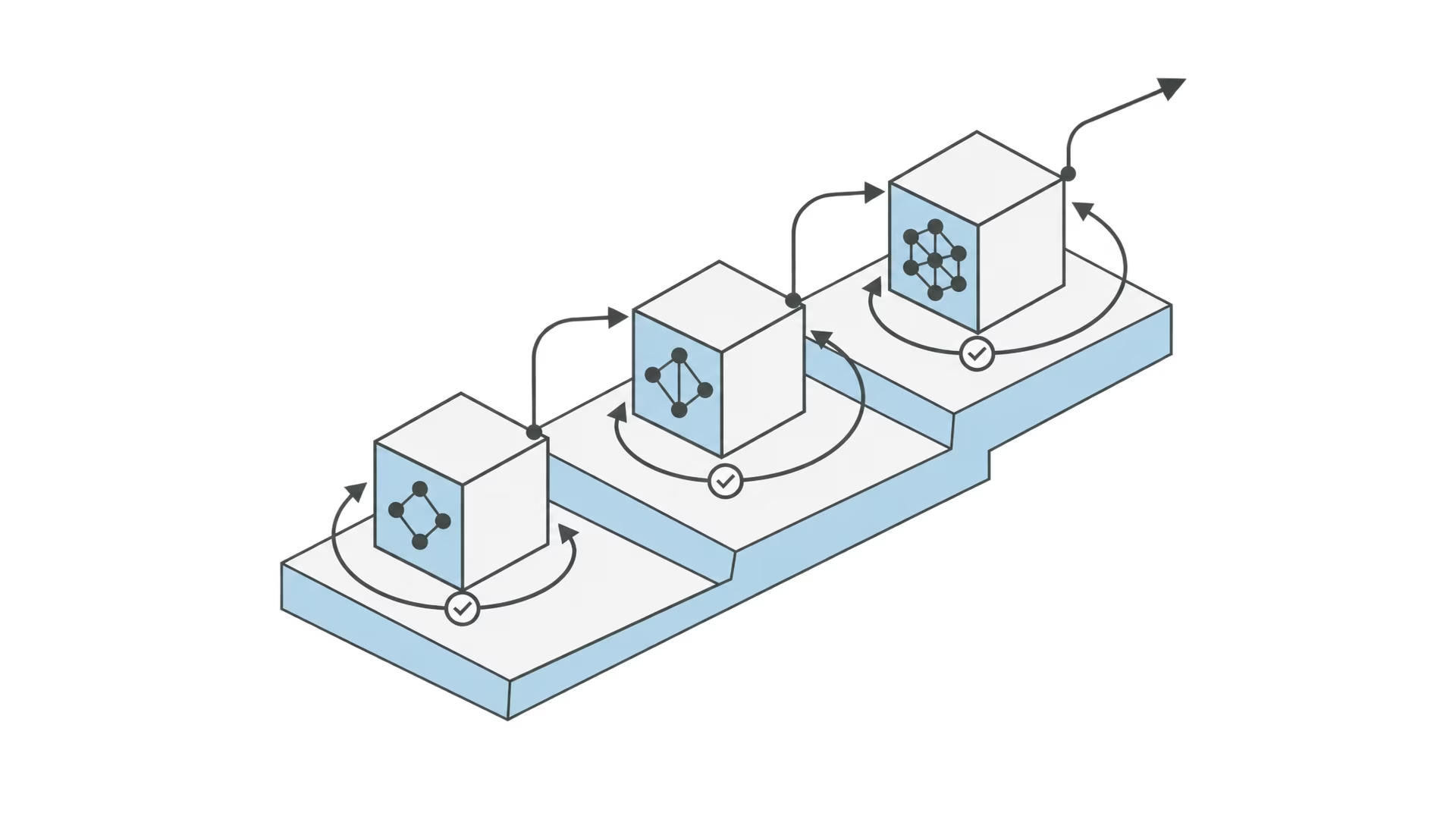
Baidu’s illustration of ERNIE Evolve, its automated AI research system.

Baidu unveiled ERNIE Evolve, an AI system that runs its own experiments to improve AI code. Baidu says it sped up its in-development ERNIE-5.5-Flash model by 33.7% on GPUs and more than sixfold on Kunlunxin chips. All figures are Baidu’s own.
Baidu has built an AI system that runs its own experiments to improve AI code, and says it has already sped up its next model, the company said on Monday. The system, ERNIE Evolve, picks what to research, edits code and runs tests. It keeps only changes that pass separate checks the AI cannot see.
Baidu used it on ERNIE-5.5-Flash, a model still in development. On P800 chips from Kunlunxin, the Baidu chip unit eyeing an IPO, it says the model now generates text more than six times faster. On GPUs already tuned by engineers, it raised throughput by 33.7% in about three days.
The Kunlunxin figure needs context. Much of it came from switching on features the chip setup was not yet using, China AI Dispatch noted, so it is not a like-for-like comparison with the GPU results.
Baidu also tested ERNIE Evolve on three public AI research challenges. It says it beat the best public results on two, including a 38.9-second NanoGPT Speedrun against a 39.9-second record, and came close on the third. Baidu has not submitted that run to the official leaderboard, China AI Dispatch said.
Baidu’s results table also beats Recursive, the startup that says its own AI system largely built its Flint coding model. The race to get AI to improve AI is heating up. Anthropic says Claude writes over 80% of its code, and Sergey Brin says Gemini now helps build its successor.
Baidu next plans to use the system on model training, and later to have AI design its own tests. It says this kind of self-improvement must stay under human control.
“Its scope should grow only while people can still understand, supervise, and stop the system,” Baidu wrote.
Get the TNW newsletter
Get the most important tech news in your inbox each week.


