
On Friday, amid much press excitement, Facebook and the UK government announced a partnership to gather public ideas for how the state could make spending cuts. Four days on, we’re left wondering “How exactly does this partnership work?”
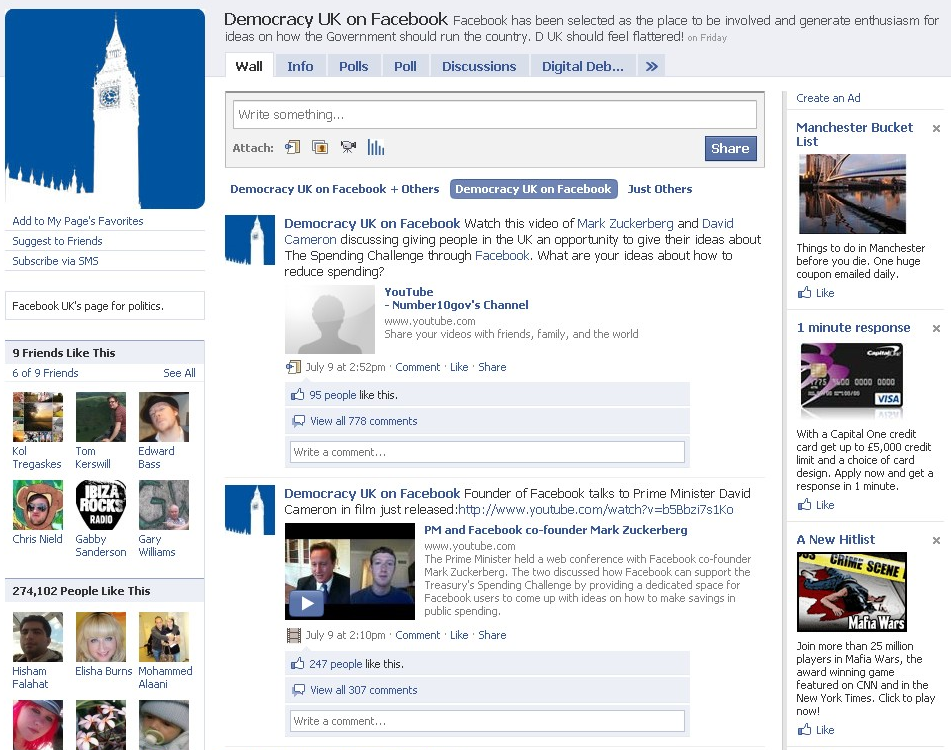
In a video conversation between Facebook CEO Mark Zuckerberg and Prime Minister David Cameron, released to coincide with the announcement, Zuckerberg talks about “Harnessing the energy and ideas that Facebook users have to help the UK public save money”. Cameron says that the partnership with Facebook will save money by providing a free way of engaging with the public online.
All very exciting, forward thinking stuff but how has it played out so far? In actual fact it appears that the engagement is taking place away from Facebook on the government’s own Spending Challenge website. That’s all well and good if it was the intention, but it wasn’t the original message and no-one’s told Facebook’s users.
On Friday, Facebook’s Democracy UK page published four posts related the Spending Challenge. None of them ask for suggestions to be posted directly to Facebook, instead linking to the government’s own website and YouTube channel. Still, at the time of writing these posts have garnered nearly 2000 comments between them. There are lots of suggestions for saving money in there but is anyone listening?
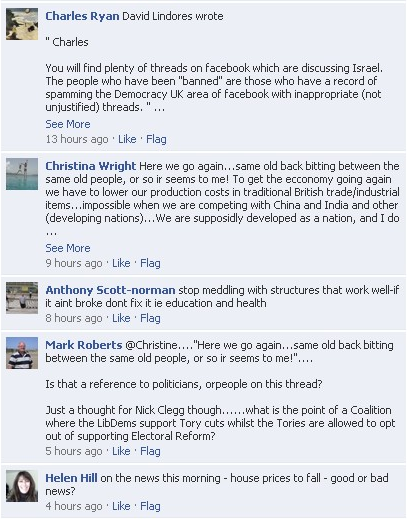
Even if someone from the government tried to make sense of the arguments in these Facebook comments, they’re more akin to graffiti on a Westminster pub toilet wall than anything easy to quantify. Users argue between each other and hurl personal insults. Working out what public spending any of them actually think should be cut is a difficult business at best. See this typical sample…

The 💜 of EU tech
The latest rumblings from the EU tech scene, a story from our wise ol' founder Boris, and some questionable AI art. It's free, every week, in your inbox. Sign up now!
Meanwhile, there’s a much more sedate HM Treasury Spending Challenge page also available. Only 32 people ‘like’ it and we’re not even sure it’s official.
In short, if Facebook is wanting users to submit their ideas directly via its site, it’s not being very clear about how to do it. Maybe Facebook doesn’t want users’ opinions posted directly at all, and is simply offering its support to the government’s campaign. That’s all very well, but at present the message both confused and confusing.
One thing’s for sure, sending users off to an official government website makes Cameron’s claims that they are saving millions of pounds in web development costs ring a little hollow. They’re probably saving a lot of marketing money but that’s a different thing entirely.
We approached Facebook for comment almost 24 hours ago and are yet to hear back. We’d certainly love some clarity on the issue. What is Facebook’s exact role and will user’s comments on the site be considered alongside those entered more formally on the government’s own site?
Get the TNW newsletter
Get the most important tech news in your inbox each week.