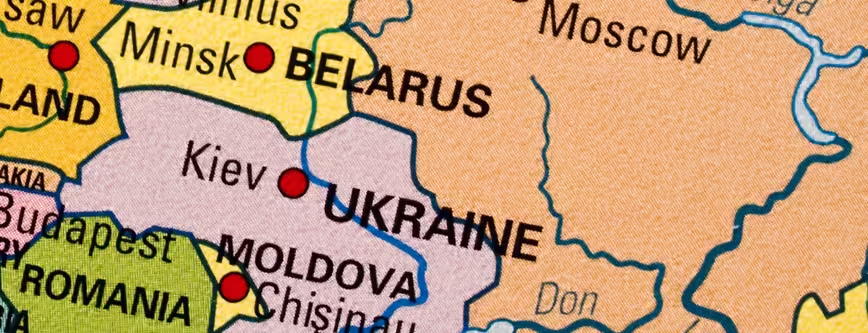
Even though December is a traditionally slow month for tech news, it has brought quite a number of stories worth your attention from eastern Europe. Check out the most important headlines in our round-up and make sure you keep up with the pace of the region.
If you think something is missing, or would like to draw our attention to an important story, feel free to ping the author on Twitter (@shlema) or by e-mail at [email protected].
Startups, VCs, accelerators
- StartUp Europe Week has landed in Krakow.
- A Californian investor wants to “help Ukrainian startups attract investors from all over the world”.
- Built by a Romania-founded company, ArcaBoard is a real hoverboard—but it’ll cost you €18,000.
- Poland’s COOLOMAT wants to transform e-commerce for food products.
- Czech Republic-based startup Angee has started an additional crowdfunding campaign on Indiegogo for its home security and communication system.
- A Polish game studio is reconstructing Chernobyl in virtual reality.
- PioneersKyiv: App CRM startup walks away with first prize, industry experts discuss startup risks and post-war entrepreneurship.
- Russian startup N-Tech.Lab has won the world championship in face recognition MegaFace Benchmark.
- UAE-founded startup incubator FasterCapital has launched in Ukraine.
- Russian startup Skillaz has moved its HQ to Lithuania.
- Ukrainian-British TRData wants to be the “Bloomberg for emerging markets”.
- Polish startup accelerator Orange Fab Polska has begun to accept applications from Belarus, Estonia, Latvia, Lithuania, Russia and Ukraine.
- Speedinvest and Paua Ventures: More cash to CEE startups.
Funding deals and M&A
- Ukrainian startup Prodvigator has attracted $250,000 in funding from Digital Future.
- Ukrainian startup Rentberry has attracted $845,000 in seed funding at a valuation of $3 million
- Russian startup Skillaz has raised €160,000 in funding.
- Lithuanian startup Vinted has scored $27 million to become the first choice for second-hand shopping.
- Lithuanian TransferGo has raised a record $2.5 million seed round.
- Stock photo marketplace Depositphotos has raised $5 million from EBRD and TMT Investments “to challenge market giants”.
- Russian 3D-scanning startup Cappasity has attracted $650,000 in funding at a valuation of $4 million.
- VC fund Target Global with Russian roots has invested $13 million in US-based startup Blue Apron.
- Russian VC fund Maxfield Capital has participated in a $1.45 million funding round for Finnish fintech startup MONI.
- Russian venture fund Titanium Investments has invested $1 million in an Israeli startup MUV Interactive.
- Russian investor Yuri Milner has participated in a $25 million funding round for Indian startup BlackBuck.
- Russian funds have invested in German companies Cuponation and Nestpick.
- Ukraine-founded fund Imperious Group has invested $350,000 in UK’s InstantAPI.
- Russian billionaire Roman Abramovich has invested $2 million in an electronic pill startup MelCap and poured an undisclosed amount in Israeli messenger Blindspot.
- Russian-founded Parallels has sold its Odin Service Automation platform to Ingram Micro for “more than $100 million”.
- Russian OTA OneTwoTrip has acquired an airplane ticket search engine Corner.
Government and policy
- Russian lawmakers have proposed a new 18 percent tax on foreign-developed apps.
- Vladimir Putin has enacted million-ruble fines on Internet search engines for failure to protect the “right to be forgotten”.
- Russian president’s advisor has threatened to block Telegram for “de-facto helping” terrorists.
- Estonia has added 7,000 new ‘e-citizens’ thanks to e-Residency program.
- The biggest data center in Russia will be nuclear powered.
- Kazakhstan has moved to tighten control of Internet traffic.
- Russian censors said they’re ready to start blocking mobile apps on iOS and Android.
- With an eye on Russia, Estonia plans to upload much of its government data to computing clouds.
- Digital Albania and Digital Kosovo, agreement signed.
Bigger companies
- Russia’s first commercial computer chip will hit the market in early 2016.
- US video streaming service Netflix will start operations in Russia in January 2016.
- Russia’s CardsMobile and UK’s Tedipay have announced their intention to invest $9 million in a contactless payment project.
- A Russian newspaper has been ordered by a court to give a photoblogger free advertising, after stealing his work.
- Russia’s B2B-Center and China’s XBNiao have teamed up to develop cross-border B2B trade.
- Russian-founded payment system WebMoney has received a licence to issue electronic money within the European Union.
- Ukraine’s largest bank is now offering online retailers the ability to receive payments in Bitcoin.
- Uber to enter Ukrainian market, infrastructure ministry says.
- IKEA Russia has launched a startup accelerator.
- Yandex has released its Launcher, previously available in Latin America only, to Russian customers.
- Ukrainian IT companies have met in New York for the Ukraine: Rise of Tech Nation discussion
- Russian cybersecurity company Kaspersky Lab shakes up US leadership amid geopolitical concerns.
- A mysterious collector has opened the world’s largest private Apple exhibition in Prague.
- Yandex employee stole search engine source code, tried to sell it for just €37,000.
- Kaspersky Lab to cooperate with China’s Zhongguo Wangan on cyber security.
- Alibaba has resumed B2C deliveries to Crimea and began helping Russian companies sell goods in China.
In other news
- Innoventure wants to help Polish scientists take their scientific breakthroughs to market.
- Vilnius will host the Baltics’ largest bitcoin and blockchain conference in April.
- Russia’s development of its Glonass global navigation system is nearing completion and it is now undergoing final tests at the Defense Ministry.
- 20 tons of black market smartphones have been seized at the Pulkovo Airport in St Petersburg, Russia.
Good (long) reads from around the Web
- New Year online shopping in Russia 2015.
- Latvian Private Equity and Venture Capital Journal 2015.
- Prishtina Startup City Guide.
- Will Fintech Become A Buzzword Du Jour In Russia?
- How To Web, the startup ecosystem engine of Eastern Europe.
- Madberry CEO Dmitry Sverdlik: “I don’t see significant cultural differences between a Ukrainian team and a Silicon Valley team”.
- Making The Impossible Possible: The BeaconValley Global Hackathon.
- 10 innovative Central European startups you ought to know
- Report: Ukraine is now Europe’s leading software development powerhouse
- Let us introduce… ABC Accelerator from Ljubljana
- ABBYY’s CEO Sergei Andreyev: “The decline of the ruble against the dollar is helping us develop new products and technologies”
- Ukraine’s success stories: A look at the nation’s top innovators
- Russian kick scooter app is coming to Europe
- CEO of Lithuanian startup Vittamed: US, Europe and Malaysia are persuading us to build the first plant there
- Report: StartUS Connect Tirana Edition 1.0
- Meet a social network for Polish students that is doing better than LinkedIn and FaceBook
- Dmytro Shymkiv, Deputy Head of the Ukraine’s Presidential Administration: “We want the high-tech sector to become one of the pillars of this country’s future”
- Banks of the future are already here
- Lithuanian startups in 2015
- Yandex queries in review 2015
- Meet Vladimir Putin’s new Internet advisor, German Klimenko
Get the TNW newsletter
Get the most important tech news in your inbox each week.


