
A lot can be said for the announcements at this past week’s Google I/O conference, but most of what we’ve heard around the Internet tends to come from one of two camps. Either Google has just laid down the gauntlet, or the company has simply lost its mind and is reaching for viability.
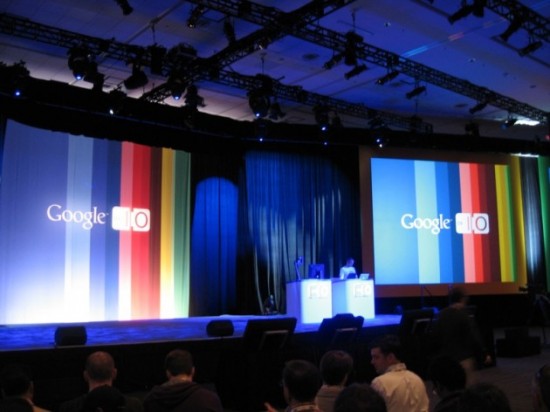
As we look back over the events of the past week (and even the few months previous), one thing continues to ring in my head: Google is succeeding in the blind spot of others. Now, I won’t lay out a claim like that without backing it up, so here’s what I see.
Google TV
When Google announced Google TV, it didn’t really surprise anyone. We all knew it was coming. However, I ‘m not sure that anyone took into full view the extent to which Google had planned this project.
Unlike its closest competitor, Apple TV, Google TV seems considerably less like a back burner project. Where Apple TV has gone blind toward evolving, Google is coming out of the gates with a plethora of options. Apple failed to launch with anything more than a set top box that, while beautiful and full of options, is becoming very quickly dated.
Google came out swinging, providing options across the board. Want a TV with Google integrated? Sony will handle that. Only need a set top box? Google’s got you covered. Want all of that to mesh with your existing equipment? Done. Where Apple’s xenophobia lingered, Google came in and simply made a product that will do what we want it to do, without the need to be tethered to anything else.

Android 2.2 – FroYo
The beauty of open source really comes into play here. Android phones are being activated at a break-neck speed, and features are rolling out quickly. Of course, we can’t talk about features without mentioning the fragmentation across the Android customer base, but that matter is being settled via natural selection of the technology life.
Both Microsoft and Apple have seriously goofed in this past year. MS had something very special with Widows Phone 7. It honestly has a lot of potential. But I will almost wager that it will be overshadowed by the Kin phones. Right now, if I were to tell the vast majority of people about a new Windows-based handset, they’d chuckle. The release of the Kin was shortsighted at best, and deadly foolish at worst.
Apple? Let’s just say that waiting months for something shouldn’t always have to happen. I talked about this matter at great length in another article, so I won’t beat a dead horse. But again, all of these little things that are bugging people about the iPhone are being handled with grace by Android devices.
Privacy
Oh look! It’s everyone’s favorite buzzword of the moment! Let’s face it, folks. When it comes to privacy, there are more than a few companies that are screwing up right now. Google isn’t without fault, here. But there is one major difference: Google is doing something about it.
The company as a whole tends to learn from its mistakes quickly, and quite harshly. We all remember Google Buzz and the privacy alarms. But while other companies have “meetings” about privacy, Google changes things. Instead of “asking and answering questions” behind closed doors, Google tends to be very transparent with users of its services.
In a time when more people are concerned, this should be kindergarten logic, but so many other companies simply don’t get it. We don’t care about your meetings, we care about the results of them. If you can’t show us those, then don’t bother.
Moving Forward
Some will see my points here and call me a fool. TV, a telephone and privacy issues? These are why Google is setting the pace? Well…yes.
Google TV isn’t just a product. It’s a philosophy that the company holds very dear. Google pays attention to what the users want, and finds ways to make it happen. Instead of chastising people and asking what they’ve done for tech, Google simply provides great products.
The Android 2.2 release is another shining example of Google paying attention to its customers. Y’know what? I want Flash on my phone. Make that happen, and don’t give me a myriad of excuses as to why it won’t. This isn’t about playing video games, this is about wanting access to content, regardless of format.
The privacy argument is simply a matter of good business sense. You can’t afford, today, to be closed minded when it comes to matters of business. Corporations, even ones as large as Google, need to realize that their customers do indeed care about what information is being made publicly available.
Google is in front, at this moment, and it doesn’t appear that the company will give up its lead anytime soon. Fanboys from both sides will argue and flame, but fact is fact. When you have a company that genuinely cares what the users think of a product, it shows. When you know enough to know that you don’t know everything, you’ve finally figured out what it takes to succeed.


These are my thoughts exactly. Everything that sucks about the iPhone has been addressed by Android. Why should we have to go through 6 generations of phones and 4 OS’s to get the features we want? Apple has finally decided on multi-tasking, folders, camera with a flash etc. Whatever. Don’t tell us what we want or need, just give it to us. Treat your customers with respect. Good job Google.
Are you people seriously comparing shipping product, in this case iPhone OS 3.x with ANNOUNCED product futures?
Get a grip haters.
Are you people seriously comparing shipping product, in this case iPhone OS 3.x with ANNOUNCED product futures?
Get a grip haters.
Oh, one more thing: “Treat your customers with respect. Good job Google.” Did you really say that about {gasp} GOOGLE? Do some reading about your corporate savior of choice.
u r a pigeon
I believe that the competition here goes way beyond Google TVApple TV.This is a harsh wake up call to all the IPTV players across the board, who until now, presented fragmented non standardized offering. while in recent years some have included OTT, it seems like Google’s entry into this market is much better orchestrated. in the end, it all depends on access to content and user adoption. looking forward to see what happens next.
I am curious what you saw in the Google TV presentation that convinces you that it’ll present a non-fragmented, standardized offering. I am looking forward to seeing what Google TV actually is.
“But while other companies have “meetings” about privacy, Google changes things.”
It’s also a matter of confidence.
Google has enough confidence in its services that it can make its Android operating system open-source, and use open industry standards for communication.
This contrasts to Microsoft, which has always tried to limit you to using only its own closed proprietary formats. Even today, Microsoft still behaves in this way. For example, last week Hotmail was updated, but Microsoft still refuses to give you access to the IMAP email protocol, instead pushing its proprietary ActiveSync instead. If it wanted to, it could have allowed both, but it didn’t want to. Same old Microsoft as ever.
Microsoft’s Windows Phone 7 is just one big disaster. It will be the most closed phone platform ever produced. Like iPhone, it limits where you can buy applications from (only from Microsoft’s own store). But iPhone uses an open WebKit/HTML5 browser, whereas Windows Phone 7 will use a version of IE7 browser that doesn’t comply with standards (limiting internet apps).
Brad’s article mentioned that Microsoft’s KIN phone will put a damper on Windows Phone 7. It’s true. But it gets worse. Microsoft will release Windows Phone 7 feature-incomplete, with basic functions such as copy-and-paste missing. Lots more will be missing. Mozilla abandoned Windows Phone 7 because it has no native code. Skype abandoned it because WP7 only networks with HTTP, which is too slow for VoIP audio. How on earth will such a hobbled device compete with Android and iPhone? It won’t. Windows Phone 7 will fail.
As a non-geek, former journalist who loves easy to use tech tools and NOT being limited I heartily agree with your post…
…and maybe this was an apt slip of the hand, considering the product’s sad future: “Widows Phone 7″ :-)
Hahahah! Nice find, Kare. I’m leaving it!
Let’s see. Third largest American company- Google is in the rear view mirror. Let’s see. Record quarter again-Google in the rear view mirror again. Let’s see. AppleTv, huge server farm in NC waiting to go online. Google in the rear view mirror. And finally fourth gen iPhone hot off the press. Android in the rear view mirror for the last time. Google vaporware has set the Internet ablaze.
Try this again, but in English this time. I think you might have some interesting points, but none of it is making any sense.
Brad
Don’t fall the M$ style vaporware “we are the world” BS. How’s that?
It’s true that Google has managed to bring out a great many good products, but to go from three comparisons with specific companies to saying that Google is leaving all the competition in the dust seems somewhat an exaggeration.
Google TV sounds like a very compelling product when you look at TV from an Internet perspective, but comparing uniquely to Apple, who decided to concentrate on other products and markets instead of improving the AppleTV, is to ignore many other innovative and user-focused solutions including those developed by companies dedicated to making products for the DTV industry. I question too the view that most viewers are missing sophisticated and comprehensive search functionalities to improve their TV experience. I think this is to confuse the TV experience in ways that ignore the differences between the user context and expectations regarding Internet and TV. Of course we’ll see how it fares only after it hits the shelves.
As for Android, I find it humorous to disparage Apple for introducing a revolutionary new product to a broad consumer base and remaining true to a product roadmap with clear priorities that preserve a superior user experience, while conveniently forgetting the T-mobile G1 Android implementation, which released a year after the first iPhone, and was nothing if not unimpressive from the user perspective.
That a worthy Android competitor to Apple is coming out now, seems to be in no small measure due to the innovation carried out by Apple, who showed the way for the user experience and whose products revealed problems with interaction paradigms that had not been previsously considered. I think it is simply revisionist history to omit that point. It’s not surprising that Android 2.2 is coming out now and has addressed some of those shortcomes, and I don’t see how its release has somehow made the users’ wait a shorter one. It’s as if by NOT releasing products, instead of releasing good ones that simply don’t address the entire feature space, Google is therefore so much more attuned to users’ wants and needs. The real loser here, by the way, is Nokia, who basically went from the company to beat to nowhere on the smart phone market.
Finally, privacy. Obviously the comparison here is to Facebook, and Google is supposed to be so much better than other companies because they’re listening when they make a mistake and doing something about it, instead of having meetings. Well, what about having thought about it BEFORE releasing new products? That would be the hallmark of a truly leading company in my opinion.
These three examples to specific companies are supposed to add up to provide convincing evidence that “Google pays attention to what users want, and finds ways to make it happen. Instead of chastising people and asking what they’ve done for tech, Google simply provides great products.” I don’t buy this. Google isn’t providing products users want because that’s their philosophy, Google is providing them because if they are good, people will use these products more and somehow that will drive Internet traffic, which is in turn good for Google.
Google is amazingly nimble. That’s why their strategy in product after product is release, see what happens, correct and repeat. That’s a wonderful recipe for arriving to the market rapidly and using early-adopters to work the bugs out of your products. I don’t think it’s a bad strategy, either.
On the other hand, compare that to a company like Apple, whose products people actually use because they’re carefully designed before release with the user experience in mind and for which Apple does not compromise simply to please the technology enthusiasts. Which company is simply making good products? Well, both are, but I’d say one of them has a more direct interest in user satisfaction than the other one.
Agreed.