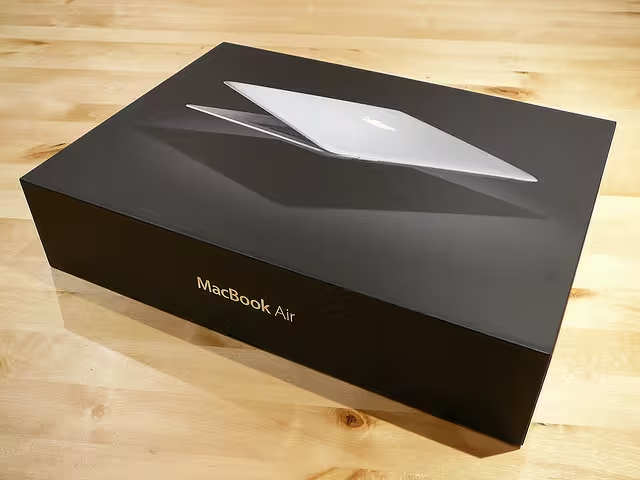
Despite the UK seeing its fifth straight decline in quarterly PC shipments, Apple’s Mac computers continued to enjoy growth in the fourth quarter of 2011, becoming the only top PC vendor to see an shipment increase year on year.
Technology research firm Gartner notes that in 2011, the UK PC market declined 15.9% as shipments declined by almost 2 million units from 2010, with the fourth quarter becoming the worst decline in five quarters.
In the fourth quarter of 2011, PC shipments totalled 2.9 million units, a decline of 19.6% year on year, as the market was affected by shifts in the economy and the rapid growth of the smartphone and tablet sector.
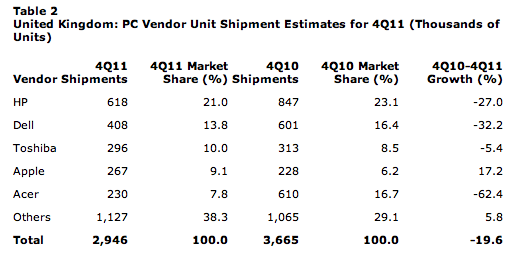
However, Apple saw its Mac shipments grow to reach 267,000 units, up from 228,000 a year previous, to post a 17.2% shipment increase. This ensured the company held a 9.1% share of the market, weathering the storm as HP, Dell, Toshiba and Acer all lost ground.

The 💜 of EU tech
The latest rumblings from the EU tech scene, a story from our wise ol' founder Boris, and some questionable AI art. It's free, every week, in your inbox. Sign up now!
Gartner makes sure to point out that tablet devices are excluded from its report, which is beneficial for comparisons to Apple’s rivals on PC sales alone. However, if they were to be included, it would demonstrate an extreme spike in shipments, incorporating a share of the 15 million iPads the company shipped in the last quarter.
With growth of 17.2% between 2010 and 2011, Apple was able to overtake Acer, which suffered a staggering 62.4% drop in PC shipments year on year, seeing them decline from 610,000 units to 230,000 units. HP saw its figures slip from 847,000 in 2010 to 618,000 in 2011, a 27% decline.
Given Apple’s growth in the UK, it could overtake Toshiba in the near future but is unlikely to pose a threat to both Dell and HP in the region. In Western Europe, HP is the clear market leader with a 22.2% share of the market, followed by Acer (13.4%) and Asus (11.5%). Only Lenovo (13.9%) and Asus (1.5%) saw increased shipments across Europe between 2010 and 2011.
Each of Apple’s rivals are working to push their new Ultrabook computers, aimed at tempting consumers away from Apple’s MacBook products. HP has been lambasted over its new Ultrabook range, which is remarkably similar and at times indistinguishable from rival Apple notebooks.
Apple is predicted to update its MacBook line in the coming months and could, in the near future, start to migrate its products to the thinner, lighter MacBook Air designs. Despite being premium products, Apple’s Mac sales show no signs of slowing in comparison to its rivals, something that Dell, HP and its other rivals will be extremely worried by.
Get the TNW newsletter
Get the most important tech news in your inbox each week.